Designing a pool for a limited or irregular backyard space requires careful planning and a practical understanding of both structural possibilities and the surrounding environment. Space constraints do not eliminate the option of having a pool, but they do require thoughtful choices in layout, design, and construction techniques. With the right planning, even compact or asymmetrical spaces can accommodate a functional and visually appealing pool.
Key Considerations for Designing a Pool for Small or Irregularly Shaped Backyards
Understanding Site Constraints
The first step in planning pool construction is assessing the available space. Small or irregularly shaped backyards often present challenges such as uneven terrain, limited access, or close proximity to structures and property boundaries. These factors directly influence the pool’s dimensions, depth, and orientation.
Site measurements must be accurate, and local regulations should be considered before proceeding. In places like Xàtiva, where property layouts may vary significantly, involving professionals experienced in construccion piscinas Xativa is important to make full use of the space without violating zoning rules or encroaching on neighboring properties.
Choosing the Right Pool Shape
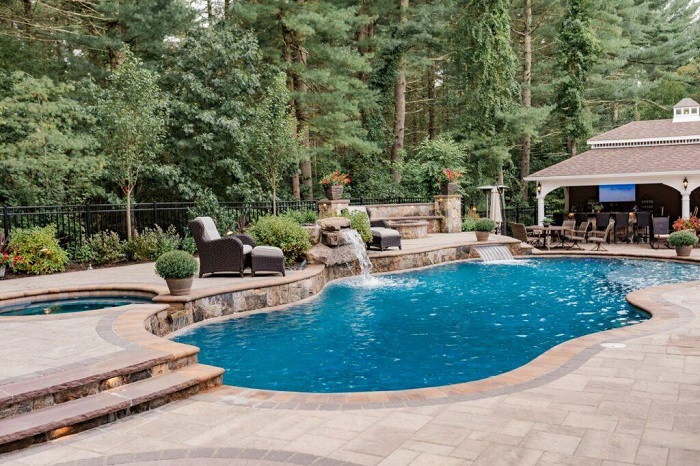
Rectangular pools are traditionally preferred for their simplicity and ease of construction. However, small or irregular spaces may benefit from alternative shapes such as freeform, kidney, or plunge pools. These shapes allow better adaptation to the existing yard layout while maintaining functionality.
A plunge pool, for example, provides a compact swimming experience and suits limited areas without compromising water depth or comfort. Freeform designs are also effective in blending with uneven or sloped terrain. Each design choice should reflect the actual usage needs, whether for relaxation, exercise, or family activities.
Maximizing Usable Area
In restricted spaces, every square meter matters. Decking, lounging zones, and access paths need to be planned alongside the pool itself. Multi-functional areas that allow both circulation and seating can help in preserving open space.
Consider installing poolside seating built into the pool’s perimeter or using integrated steps and ledges. These features can serve dual purposes and reduce the need for additional structures. Minimizing obstructions and selecting space-efficient landscaping also support a more open and practical layout.
Material Selection and Finishes
Material choices should account for both spatial efficiency and visual continuity. Lighter finishes, reflective surfaces, and neutral tones can help small pools appear larger. Natural stone, ceramic tiles, or concrete finishes often work well in restricted environments, providing durability and a clean look.
The surrounding deck material should also be selected based on the texture and safety it provides. Non-slip surfaces are particularly important in narrow walkways or where space restricts movement.
Lighting and Accessibility
Proper lighting can enhance the perception of space while making the area safer. Wall-mounted lights, underwater LED strips, and compact path lights help in defining the area during nighttime without overwhelming the limited space.
Accessibility must also be considered carefully. Steps, railings, or gradual slopes can be integrated without occupying excess space. Pool covers and maintenance access points should also be planned to function efficiently in tight surroundings.
Conclusion
Designing a pool for a small or irregularly shaped backyard is a realistic option when it is approached with a practical mindset and a clear plan. It involves selecting the appropriate shape, managing the surrounding space efficiently, and incorporating features that support both function and aesthetics.
 For Insights
Leave a comment