Learning cause-and-effect is one of the earliest cognitive skills children develop. It helps them understand how their actions lead to outcomes, which later supports problem-solving, reasoning, and decision-making. Toys play a major role in building this understanding because they offer direct, observable responses to a child’s actions. Through repeated play, children begin to connect what they do with what happens next. This is a key reason how toys help kids in early education becomes an important topic for parents and educators.
Understanding Cause-and-Effect Learning in Early Childhood
Cause-and-effect learning refers to a child’s ability to recognize that one action leads to a specific result. For example, pressing a button makes a sound, or stacking blocks incorrectly causes them to fall. These simple observations form the base for logical thinking. In early childhood, this learning happens best through hands-on interaction rather than verbal explanation. Toys provide this interaction in a controlled and repeatable way, allowing children to test actions and observe results without confusion.
Push-Button and Interactive Toys
One of the most direct ways toys teach cause-and-effect is through push-button or interactive features. When a child presses a button and hears music or sees lights, the connection between action and outcome becomes clear. Repeating this process strengthens memory and prediction skills. Over time, children begin to anticipate what will happen before they act, which shows learning progress. These toys are especially helpful for toddlers who are still developing motor control and attention.
Building Blocks and Construction Toys
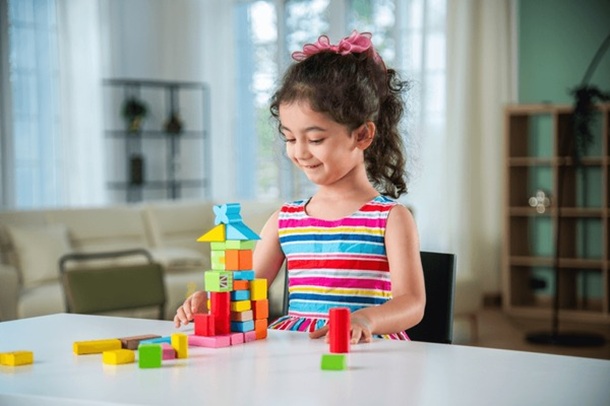
Building blocks, stacking rings, and construction sets teach cause-and-effect through physical balance and structure. If a child places a block incorrectly, the structure may collapse. This immediate response helps them understand stability, gravity, and sequence. With practice, children adjust their actions to achieve better results. These toys also support planning, as children start thinking ahead before placing pieces. This type of learning is gradual and improves through trial and error, which is a natural part of early education.
Puzzle Toys and Shape Sorters
Puzzles and shape sorters require children to match the correct piece with the right space. If the shape does not fit, it does not go through. This clear feedback teaches children that specific actions lead to success, while others do not. Over time, children learn to rotate pieces, try different options, and correct mistakes. This strengthens logical thinking and patience. These toys also improve hand-eye coordination, which supports overall learning development.
Toy Vehicles and Motion-Based Play
Cars, trains, and rolling toys teach cause-and-effect through movement. When a child pushes a car harder, it moves faster or farther. When placed on a slope, it rolls down. These experiences help children understand force, speed, and direction at a basic level. Motion-based toys also encourage experimentation, as children test different ways to move objects and observe changes in results. This type of play builds curiosity and observation skills without the need for instruction.
Role-Play Toys and Pretend Play Sets
Pretend play toys such as kitchen sets, doctor kits, or tool sets introduce cause-and-effect through imitation of real-life actions. For example, pretending to stir food or fix an object shows children that actions have expected outcomes. While the results are imaginary, the sequence of actions still follows logical patterns. This helps children understand routines, problem-solving steps, and social responses. Pretend play also supports language development, which strengthens how children describe actions and outcomes.
Repetition and Learning Through Practice
Cause-and-effect learning does not happen instantly. Children learn through repetition and consistent feedback. Toys allow repeated actions without frustration, which supports confidence. Each time a child repeats an action and observes the same result, the connection becomes stronger. This steady learning process explains how toys help kids in early education by reinforcing concepts through play rather than instruction alone.
Conclusion
Toys play a practical role in teaching children cause-and-effect relationships by offering clear, immediate responses to their actions. From push-button toys to building blocks and pretend play sets, each type supports learning through observation and repetition. These experiences help children understand action, reaction, and consequences at an early age. By engaging with toys regularly, children build thinking skills that support learning later in life. Cause-and-effect play lays a strong base for problem-solving, reasoning, and independent learning as children grow.
 For Insights
Leave a comment